
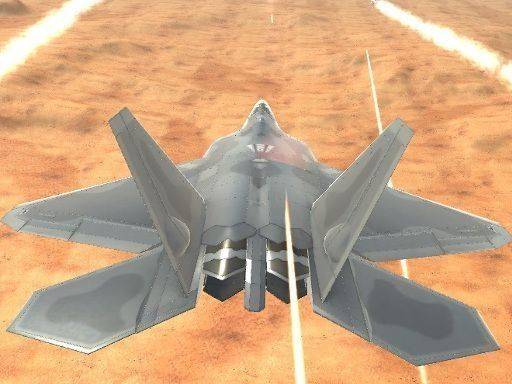
Core Flight Mechanics
Aerial Command Flight School focuses on authentic aircraft handling. Players manage throttle, pitch, and yaw to maintain stable flight through varied atmospheric conditions. The control system rewards gradual inputs rather than abrupt movements, mirroring real-world piloting techniques. Each aircraft responds differently to control surfaces, requiring pilots to adjust their approach based on the specific jet they are flying.
Mission Structure & Variety
Missions progress from basic navigation exercises to complex scenarios involving multiple objectives. Early tasks might require flying through designated checkpoints or maintaining a specific altitude for a set duration. Later missions introduce time-sensitive goals that test a pilot's ability to prioritize tasks while managing fuel and aircraft status. The game avoids repetitive patterns by alternating between defensive positioning, reconnaissance-style objectives, and coordinated maneuvers.
Progression & Unlock System
Completing missions earns access to additional aircraft and performance upgrades. New jets may offer improved speed, better fuel efficiency, or enhanced maneuverability. Upgrades can refine handling characteristics, allowing pilots to tailor their aircraft to preferred flying styles. The progression curve encourages repeated practice on earlier missions to master fundamentals before tackling advanced challenges.
Training Environment
A dedicated training mode provides a low-pressure space to practice fundamental maneuvers. Here, pilots can experiment with different control sensitivities and learn how each aircraft behaves during turns, climbs, and descents. The training area includes visual cues that help new players understand the relationship between control inputs and aircraft response. This sandbox approach builds confidence before entering mission-based scenarios.
Visual & Audio Design
The game presents a clean, clear visual style that prioritizes readability during high-speed flight. Instrument panels display essential data like altitude, speed, and heading without clutter. Environmental visuals, such as terrain and cloud formations, provide context without distracting from the primary task of flying. Sound design emphasizes engine notes and wind resistance, offering auditory feedback that complements on-screen indicators.
Strategic Decision Making
Success in Aerial Command Flight School depends on more than stick-and-rudder skills. Pilots must evaluate mission parameters, anticipate environmental factors like weather changes, and decide when to conserve fuel versus when to push for speed. Each mission presents a puzzle of timing and positioning, where a well-planned route often outperforms raw reflexes. The game rewards pilots who think several moves ahead.





Comments
0 comments